
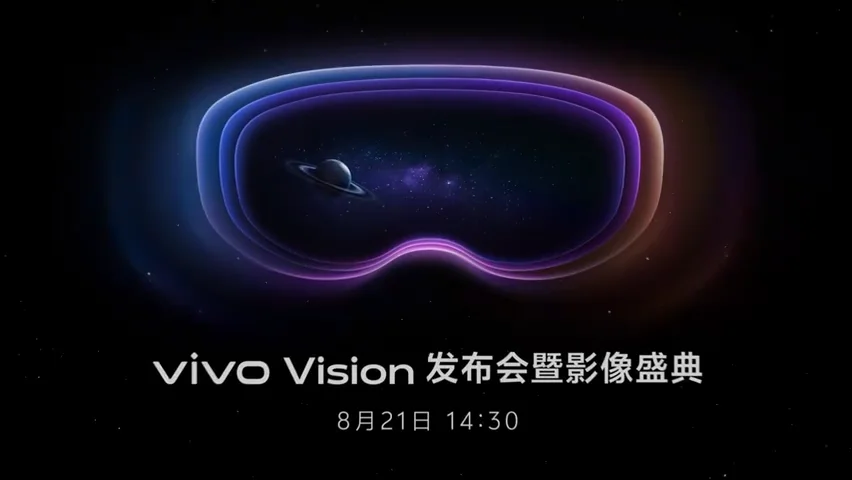
Vivo has officially revealed plans to enter the mixed reality market with its Vivo Vision headset, launching August 21 in China. The company shared teaser images on Weibo, giving us our first proper look at this ambitious new device.
What Makes Vivo Vision Special?
This marks Vivo’s first foray into mixed reality technology. While leaks previously referred to it as “Vivo Vision MR,” the official name drops the “MR” – simply calling it Vivo Vision.
Design & Key Features
The headset sports a premium metallic build with clear design influences from Apple’s Vision Pro, including:
- A visor-style front display
- Adjustable digital crown (likely for immersion control)
- Breathable knit headband for comfort
- Light-blocking seals around the eyes
According to Hong Yi, Vivo’s Smart Device Products Manager, the Vision focuses on delivering high-precision immersion with intuitive hand gesture controls. The company emphasizes its lightweight design, suggesting it’ll be comfortable for extended use.
Limited Rollout Strategy
Interestingly, Vivo isn’t doing a full commercial launch immediately. Instead, Chinese consumers can experience it first through in-store demos available by reservation. This cautious approach suggests Vivo wants to:
- Gather user feedback
- Refine the experience
- Build hype before wider release
Vivo has announced that its mixed reality headset called Vision will launch on August 21. The Chinese company is the world’s fourth-largest smartphone brand that shipped 27 million units in Q2 2025. pic.twitter.com/wcch8n5kdT
— Nathie (@NathieVR) August 13, 2025
The Big Question: Apple Vision Pro vs Vivo Vision
While the designs share similarities, key differences may determine their success:
Potential Vivo Advantages:
✔ Likely more affordable pricing
✔ Lighter weight for comfort
✔ Android ecosystem integration
Challenges Vivo Faces:
❌ Apple’s established AR/VR developer support
❌ Need for compelling exclusive content
❌ Brand perception in premium tech segments
What This Means for the MR Market
Vivo’s entry signals growing competition in mixed reality. If successful, it could:
- Push more brands to develop MR products
- Drive innovation through competition
- Make the technology more accessible
Final Thoughts
The Vivo Vision shows promise, but its success hinges on real-world performance and software support. The limited initial release suggests Vivo is being strategic – will this pay off against Apple’s established offering?
What do you think? Can Android-based MR headsets compete with Apple’s ecosystem? Share your predictions below!
Source
About the Author


This is my first time pay a quick visit at here and i am really happy to read everthing at one place
istanbul escort