

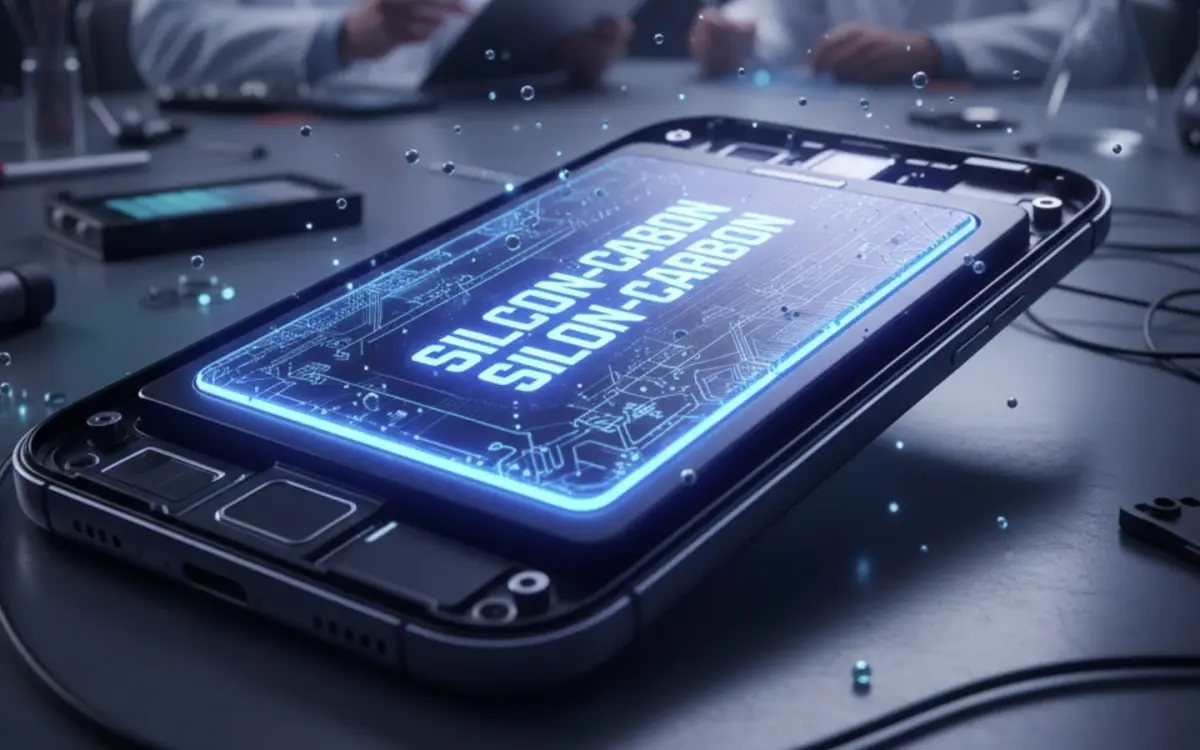
Samsung Electronics is moving closer to adopting silicon carbon battery technology in its smartphones. This marks a possible change in the company’s battery strategy, which has traditionally focused more on safety and stability than on pushing capacity limits.
Key Highlights
- Samsung confirms plans to use silicon carbon batteries in future smartphones.
- Technology allows higher capacity without extra weight or thickness.
- Chinese brands already offer phones with 7000mAh+ batteries.
- Samsung prioritizes safety and durability after past battery issues.
- Galaxy S26 series still has modest battery capacity.
- Future Galaxy models may see dramatic stamina improvements.
Samsung’s Policy Shift
At a media roundtable before Galaxy Unpacked 2026, Vice President Moon Seong-hoon, head of Samsung’s smartphone R&D team, confirmed that silicon carbon anode technology will be used in upcoming smartphones. While no launch date was given, this statement shows that development is actively progressing.
What Makes Silicon Carbon Batteries Special?
Traditional batteries use graphite as the negative electrode. Silicon carbon batteries replace this with a silicon-carbon composite, which can hold more lithium ions in the same volume. This means:
- Higher battery capacity without making phones thicker or heavier.
- Longer usage time for power-hungry apps and features.
- Potential to compete with rivals offering massive batteries.

Competitive Pressure from China
Chinese smartphone makers like Honor, Oppo, OnePlus, and Xiaomi have already introduced models with 7000mAh+ batteries. These large capacities are seen as a major selling point, especially for users who demand long-lasting performance.
Samsung, however, has kept its battery sizes relatively modest, focusing instead on safety and reliability.
Safety First – Lessons from the Past
Samsung’s cautious approach comes from the Galaxy Note 7 battery incident, which caused overheating and safety concerns. Since then, the company has prioritized:
- Durability
- Longevity
- Strict in-house testing for expansion resistance and charge-discharge cycles
This explains why even the Galaxy S26 series announced recently did not feature a big jump in battery capacity.
What This Means for Galaxy Users
Samsung’s confirmation shows that a transition to silicon carbon batteries is on the horizon. While the timeline is unclear, users can expect significant stamina improvements in future Galaxy models.
For those who feel battery evolution has been slow in recent years, this is a promising sign that Samsung is preparing a major upgrade in smartphone endurance.