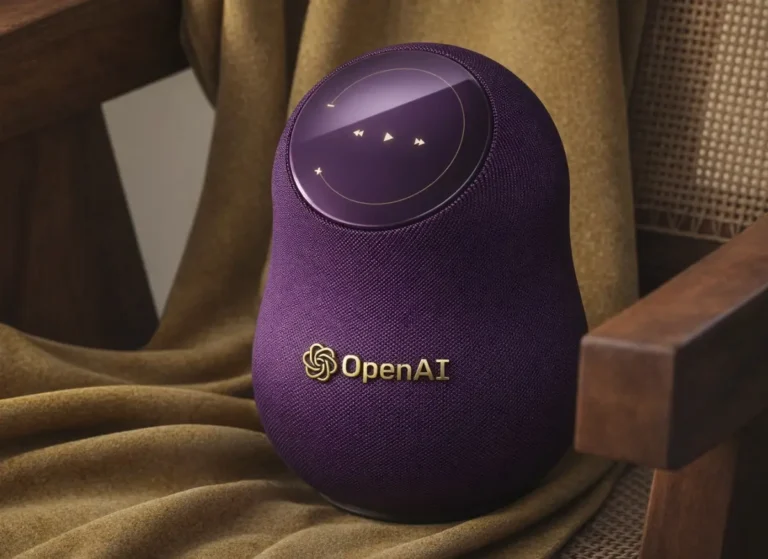
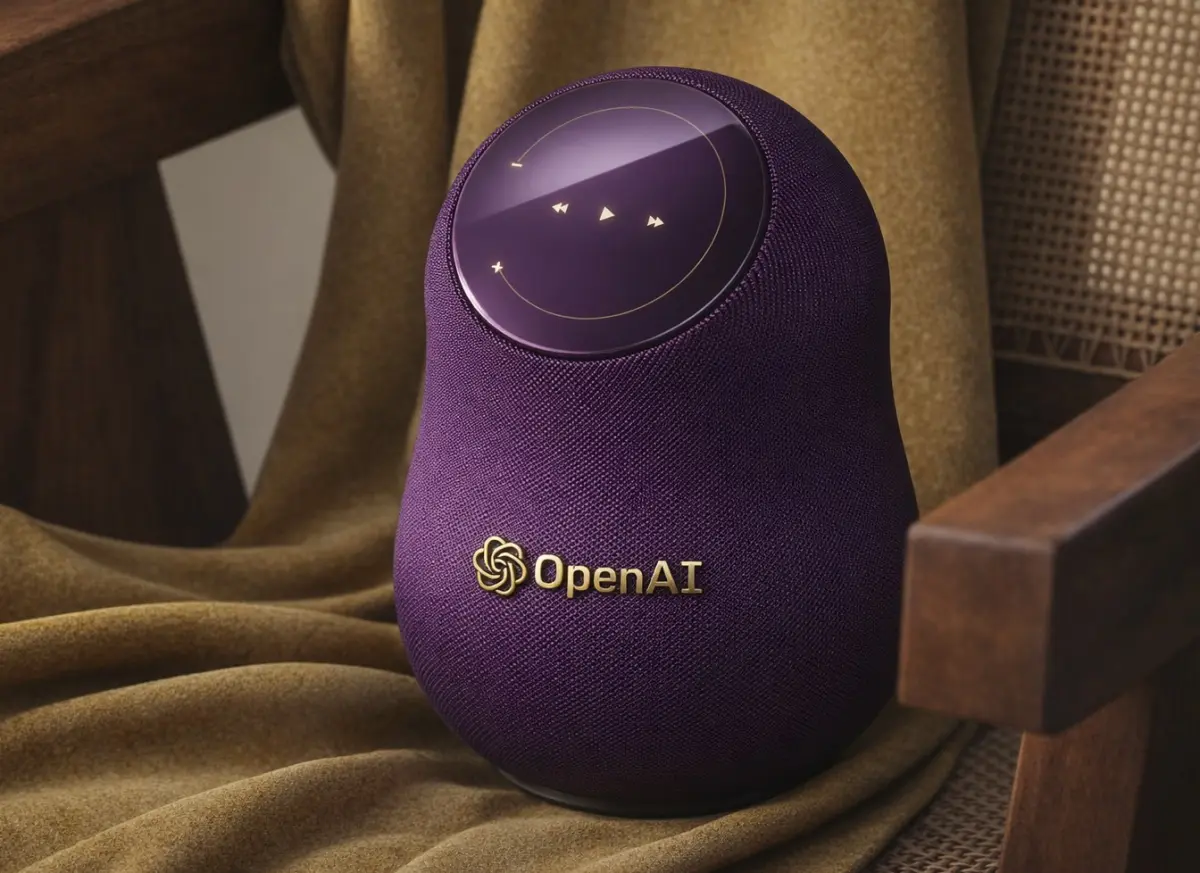
OpenAI, the company behind interactive AI tools like ChatGPT, is reportedly preparing its first hardware product — a smart speaker with advanced features. According to reports, the device could launch as early as 2027, marking OpenAI’s entry into the competitive smart home market.
Key Highlights
- Smart speaker with built-in camera for object and facial recognition.
- Developed in collaboration with former Apple designer Jony Ive.
- Over 200 employees involved in the project.
- Price expected between $200–$300 (approx. 30K–45K yen).
- Could allow purchases via facial recognition.
- Competes with Google’s upcoming Gemini-powered smart speakers.
- OpenAI also working on smart glasses and smart lamps.
Collaboration With Jony Ive
The project is being developed in partnership with Jony Ive, the legendary designer behind many of Apple’s iconic products. This collaboration signals OpenAI’s ambition to create hardware that is not only functional but also stylish and user-friendly.
Camera and Recognition Features
One of the most notable features is the built-in camera. Reports suggest it will be able to:
- Recognize objects placed nearby.
- Understand conversations happening in the room.
- Identify users through facial recognition, similar to Apple’s Face ID.
This could even allow users to make purchases directly by confirming their identity with the camera.
Competition With Google
Google is also preparing to revamp its smart speaker lineup. The new Google Home is expected to integrate the company’s Gemini AI, focusing on strengthening its ecosystem rather than adding new hardware features.
This sets up a direct competition between OpenAI’s camera-equipped smart speaker and Google’s Gemini-powered devices.
Other Hardware Projects
In addition to smart speakers, OpenAI is reportedly working on smart glasses and smart lamps. While details are limited, these products could arrive as early as 2026, showing that OpenAI is serious about expanding into hardware beyond software.
Why It Matters
The move highlights a growing trend: AI companies entering the hardware market. By combining powerful AI assistants with physical devices, companies like OpenAI and Google aim to reshape how people interact with technology at home.
If successful, OpenAI’s smart speaker could become a central hub for AI-powered living spaces, offering personalized experiences far beyond today’s smart devices.
Source
About the Author