

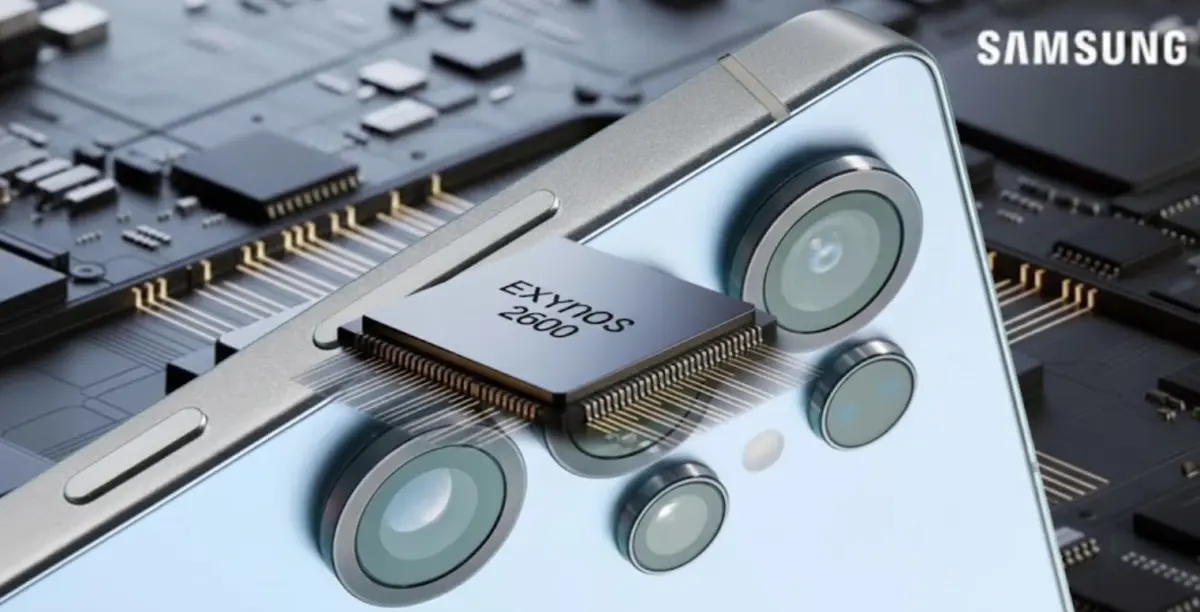
Samsung is bringing back its in‑house Exynos processor for the upcoming Galaxy S26 series. The company’s decision to re‑adopt the Exynos 2600 is seen as a smart move to reduce rising chip procurement costs and lessen dependence on Qualcomm’s Snapdragon.
Highlights
- Samsung Galaxy S26 and S26+ to use Exynos 2600 chips
- Exynos costs around $20–30 per unit (≈ 5000 yen)
- Snapdragon 8 Elite Gen 5 costs $240–280 per unit
- Dual‑chip system returns after Snapdragon‑only Galaxy S25
- Analysts expect a 7:3 ratio of Snapdragon vs Exynos models
- Performance differences between chips remain a concern

Main Story
Samsung has decided to equip the Galaxy S26 and S26+ with the Exynos 2600, developed by its System LSI division. This move could save the company tens of millions of dollars, as the Exynos chip is far cheaper than Qualcomm’s Snapdragon 8 Elite Gen 5.
In recent years, Snapdragon prices have surged, with the latest chip costing between $240 and $280 per unit. This is a sharp increase compared to the Snapdragon 8 Gen 3, which was priced around $170–200. The rising costs have put pressure on Samsung’s Mobile Experience (MX) division, making profitability harder to maintain.
By reviving Exynos, Samsung is taking a practical approach to cost management rather than competing head‑to‑head with Qualcomm. A difference of just a few dozen dollars per unit translates into massive savings when applied across millions of Galaxy devices.
Performance Concerns
While the cost benefits are clear, performance differences between Exynos and Snapdragon have long been debated. Snapdragon models are often praised for better heat management and power efficiency, while Exynos versions have faced criticism for higher heat generation during communication and less optimized performance.
Qualcomm’s custom‑designed cores are finely tuned for smartphones, whereas Samsung’s Exynos chips often rely on Arm’s reference designs. This difference in approach has historically led to noticeable performance gaps.
Interestingly, early reports suggest that the Snapdragon 8 Elite Gen 5 runs “somewhat hot.” If the Exynos 2600 delivers stable performance in real‑world use, it could help Samsung reshape the image of its in‑house chips. Benchmarks show decent numbers, but the real test will be everyday usage — battery life, heat control, and communication stability.
Market Strategy
Analysts predict that the Galaxy S26 lineup will use Snapdragon in about 70% of models, with Exynos covering the remaining 30%. This balanced approach allows Samsung to test the waters for a full‑scale Exynos revival in future flagships.
Expert Insight
According to Sujit Ram, Samsung’s decision to revive Exynos is a calculated move to strengthen profitability while reducing reliance on external suppliers. If the Exynos 2600 proves reliable, it could mark the beginning of a new era for Samsung’s chip strategy.
Conclusion
The Galaxy S26 series represents more than just a new smartphone launch — it’s a turning point in Samsung’s chip strategy. By balancing Snapdragon and Exynos, the company is aiming for cost efficiency without sacrificing performance. If successful, Exynos could play a bigger role in Samsung’s future flagships.